

| Recommended pressure check frequency | At least once per month (U.S. Department of Energy, general guidance) |
| Fuel economy loss per 1 PSI drop | About 0.2% (U.S. Department of Energy) |
| Typical rotation interval | Every 5,000 to 7,500 miles (Most manufacturer owner's manuals) |
| Legal minimum tread depth (most U.S. states) | 2/32 inch (State motor vehicle codes vary; verify locally) |
| Practical replacement threshold (wet/snow traction) | 4/32 inch (General industry guidance) |
| Typical alignment check cost | $50 to $100 (General market range; prices vary by region and shop) |
Why tires are a budget item, not just a safety item
Tires touch every dollar you spend on fuel, brakes, and suspension. Under-inflated tires increase rolling resistance, which the U.S. Department of Energy estimates can reduce fuel economy by about 0.2% for every 1 PSI drop in pressure across all four tires. On a family vehicle driving 15,000 miles a year, that adds up. Worn or misaligned tires also accelerate brake pad wear and put extra stress on steering components, turning a modest tire expense into a much larger repair bill.
Hidden ownership costs like these are exactly where family budgets leak. Staying on top of tire basics is one of the few maintenance habits that simultaneously improves safety and lowers what you spend at the pump and in the service bay.
| Recommended pressure check frequency | At least once per month (U.S. Department of Energy, general guidance) |
| Fuel economy loss per 1 PSI drop | About 0.2% (U.S. Department of Energy) |
| Typical rotation interval | Every 5,000 to 7,500 miles (Most manufacturer owner's manuals) |
| Legal minimum tread depth (most U.S. states) | 2/32 inch (State motor vehicle codes vary; verify locally) |
| Practical replacement threshold (wet/snow traction) | 4/32 inch (General industry guidance) |
| Typical alignment check cost | $50 to $100 (General market range; prices vary by region and shop) |
Pressure: the check you can do in two minutes
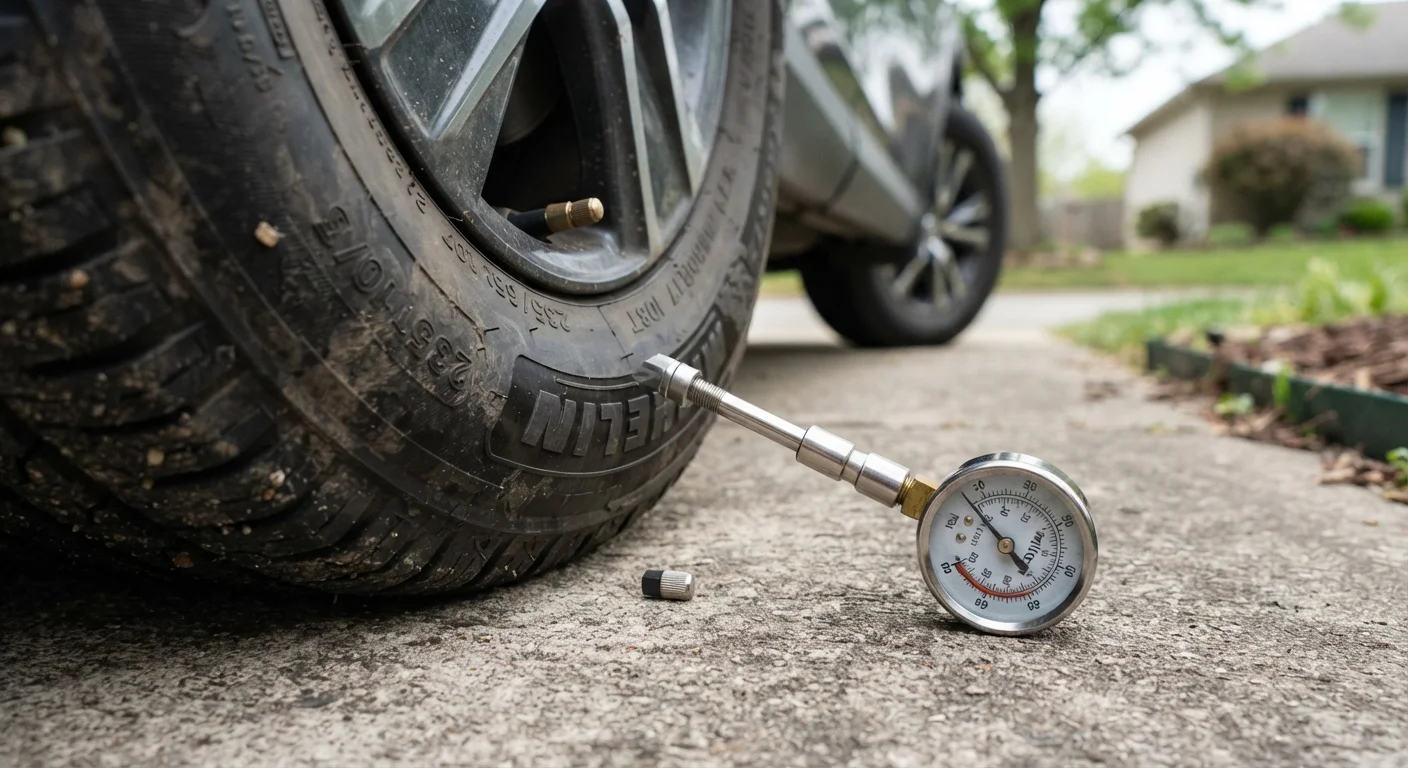
Tire pressure is measured in PSI (pounds per square inch). The correct pressure for your vehicle is printed on a sticker inside the driver's door jamb, not on the tire sidewall. The number on the sidewall is the tire's maximum pressure, which is a different figure.
Check pressure when tires are cold, meaning the car has been parked for at least three hours or driven fewer than a mile. Heat from driving expands air and gives a falsely high reading. A basic digital gauge costs a few dollars and gives a more reliable reading than the gauges built into many gas station air hoses.
Pressure should be checked at least once a month and before any long road trip. If you are planning a budget family road trip, a pressure check the morning you leave is worth the two minutes it takes.
Tread depth and rotation intervals
Tread depth is measured in 32nds of an inch. New tires typically start at 10/32" to 11/32". The legal minimum in most U.S. states is 2/32", but traction on wet roads degrades noticeably before you reach that threshold. A tread depth of 4/32" is a more practical point to start shopping for replacements, particularly if you drive in rain or snow.
A quick field test: insert a quarter into a tread groove with Washington's head pointing down. If you can see the top of his head, you are at or below 4/32" and replacement is worth considering soon. The penny test (Lincoln's head) marks the 2/32" legal limit.
Rotation moves each tire to a different wheel position to even out wear patterns. Most manufacturers recommend rotation every 5,000 to 7,500 miles, which for many drivers aligns with every other oil change. Check your owner's manual for the interval specific to your vehicle. Skipping rotations can cut tire life by 20% or more, turning a set of tires that might last 60,000 miles into one that wears out at 45,000.
Seasonal maintenance checklists are a good prompt to schedule rotation alongside other checks you might otherwise forget.
Alignment and what it actually costs you
Wheel alignment refers to the angles at which tires contact the road. When those angles drift out of specification, tires wear unevenly and the vehicle pulls to one side. The two most relevant alignment measurements are toe (whether tires point slightly inward or outward) and camber (the vertical tilt of the tire).
Misalignment is often caused by hitting a pothole, curb, or other road hazard. You may not feel dramatic handling changes right away, but the tire wear happens continuously. A tire that wears unevenly on one edge can lose half its useful tread life compared with a properly aligned one.
An alignment check costs roughly $50 to $100 at most shops and takes under an hour. Many shops recommend checking it annually or after any significant road impact. The full cost-of-ownership picture for a family vehicle includes alignment as a routine line item, not an optional one.
If you notice the steering wheel sitting off-center when driving straight, uneven wear on one tire edge, or the car drifting without input, those are practical signals to have alignment inspected by a qualified mechanic.
This article is for general informational purposes only. Always consult your vehicle's owner's manual and a qualified mechanic before performing or deferring any maintenance task.