

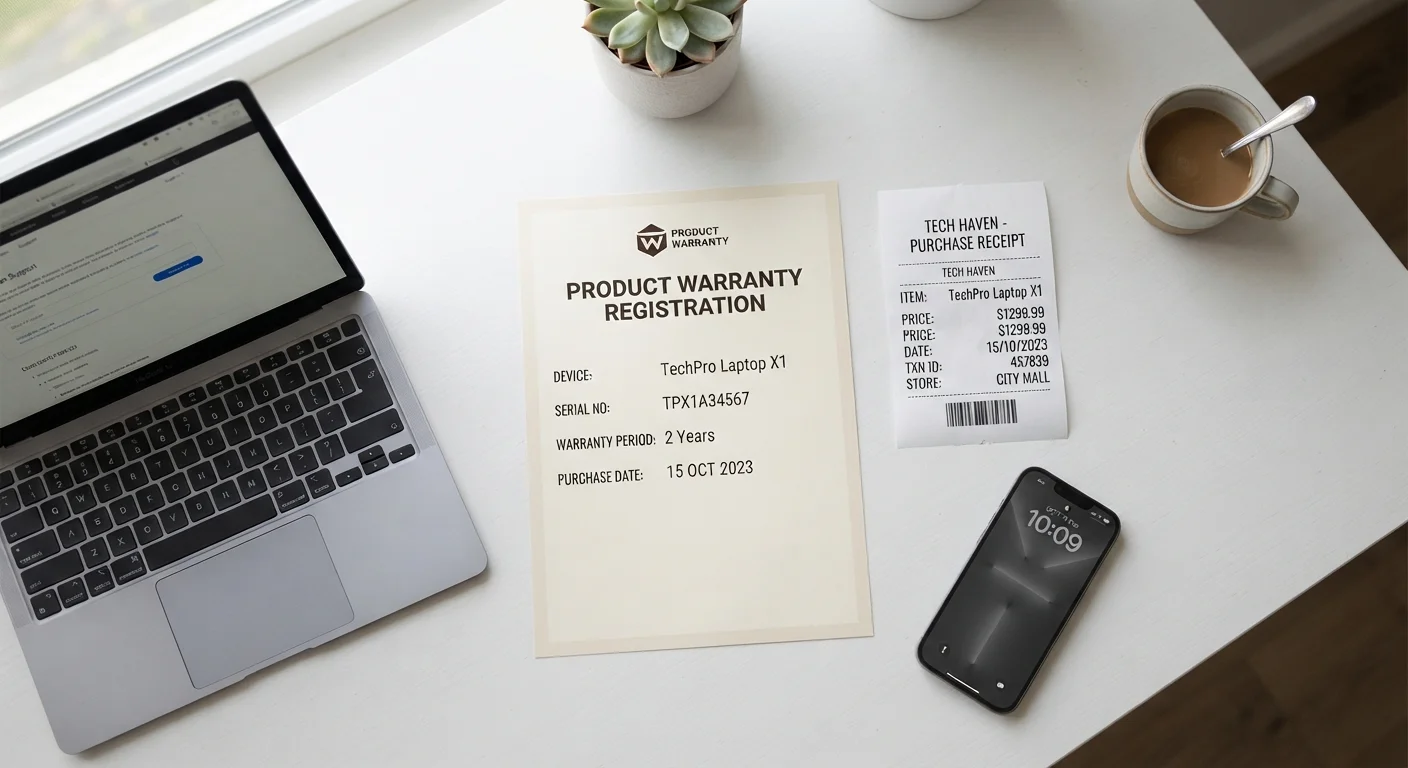
The three layers of electronics warranty protection
Most electronics purchases in the US come with at least one form of warranty protection, and often two or three stacked on top of each other. Understanding each layer before something breaks is the difference between a free repair and a bill you weren't expecting.
The first layer is the manufacturer warranty, included in the purchase price. It typically covers defects in materials and workmanship for one year, though some categories (laptops, appliances) may run longer. It does not cover accidental damage, liquid spills, or normal wear.
The second layer is a retailer or manufacturer extended warranty, sold as an add-on at checkout. These plans vary widely. Some mirror the manufacturer terms but extend the time window. Others add accidental damage coverage. Read the contract before buying, not after.
The third layer comes from certain credit cards. Several major US card issuers automatically extend the original manufacturer warranty, typically by one year, when you pay with that card. This benefit costs nothing extra, but it only applies if you paid with the qualifying card and kept the receipt. Check your card's benefits guide, because terms differ across issuers and card tiers.
If your family is considering refurbished devices, warranty coverage works differently. See what families actually get with refurbished electronics for a detailed breakdown.
What warranties almost never cover
Exclusions are where most families get surprised. Here are the common ones across virtually all standard manufacturer warranties:
- Accidental damage, including cracked screens, drops, and liquid exposure
- Cosmetic damage that doesn't affect function (scratches, dents)
- Damage caused by unauthorized repairs or modifications
- Normal battery degradation over time
- Software issues, viruses, or data loss
- Theft or loss
Extended plans sometimes fill these gaps, but not automatically. An extended plan that only mirrors the manufacturer terms is essentially paying for time, not broader coverage. Plans that add accidental damage protection are more useful for households with young children, but they also tend to cost more and often include deductibles.
Before paying for an extended plan, calculate how often your family actually files claims on existing devices. If the honest answer is rarely, the plan may not return its cost.
Keeping devices in good condition from day one also reduces the risk of hitting these exclusions. These device care practices can reduce wear before warranty issues even arise.
How to actually use a warranty when you need it
A warranty is only useful if you can activate it. That requires documentation. Store these items for every covered device:
- Original purchase receipt with date and retailer name
- Serial number (usually on the device, packaging, or in settings)
- Warranty registration confirmation, if the manufacturer required it
- Credit card statement if you're relying on a card extension benefit
Most manufacturer warranties require you to contact the manufacturer directly, not the retailer where you bought the device. The process is usually: submit a claim online or by phone, ship the device to a service center or take it to an authorized repair location, and receive a repaired or replacement unit.
Manufacturer warranty
A promise from the product maker that the device will work as intended for a set period. It covers defects in parts and workmanship, not accidents or misuse.
Extended warranty
A paid service plan that continues or expands coverage after the manufacturer warranty expires. Terms vary: some only extend the time window, others add accidental damage protection.
Credit card warranty extension
An automatic benefit on many US credit cards that adds coverage beyond the original manufacturer warranty, typically for one additional year, at no extra cost to the cardholder.
Deductible
An out-of-pocket amount you pay when filing a claim under an extended plan, before the plan covers the rest. Not all extended plans include a deductible, but many do.
Advance replacement
A service option where the manufacturer ships a replacement device to you before you return the broken one, reducing downtime. Not offered by all manufacturers or for all products.
Authorized repair location
A service center or technician that a manufacturer has approved to perform warranty repairs. Using an unauthorized repair shop can void your warranty.
Turnaround time varies. Some manufacturers offer advance replacement (they ship a unit before you return the broken one), while others require you to send the device first. If your family depends on a device daily, ask about turnaround time before you file a claim rather than after.
For smart home devices with shorter support windows, check whether the manufacturer still supports your model before counting on a warranty repair. This overview of smart home devices covers where manufacturer support tends to be thinner.