

Key Takeaways
Summary
28 items · 30 to 60 minutes
Why every household needs a first aid kit
Minor injuries and sudden illnesses happen to every family: a child scrapes a knee, an adult gets a burn from the stove, or a fever climbs on a Sunday night when the pediatrician's office is closed. Having the right supplies at arm's reach means you can respond calmly instead of searching the house for a bandage while managing a stressed child.
The good news is that a solid first aid kit does not require a specialty purchase. Most items on this checklist can be found at any pharmacy, dollar store, or warehouse club in smaller quantities. Building the kit over a few shopping trips, rather than all at once, spreads the cost comfortably. If you are working on a household spending plan, building in a small line item for health supplies is worth considering. See our household budget framework for ideas on where this fits.
This article provides general health information and is not a substitute for medical advice. For any serious injury, persistent symptoms, or emergencies, contact a qualified healthcare professional or call 911.
What you will need
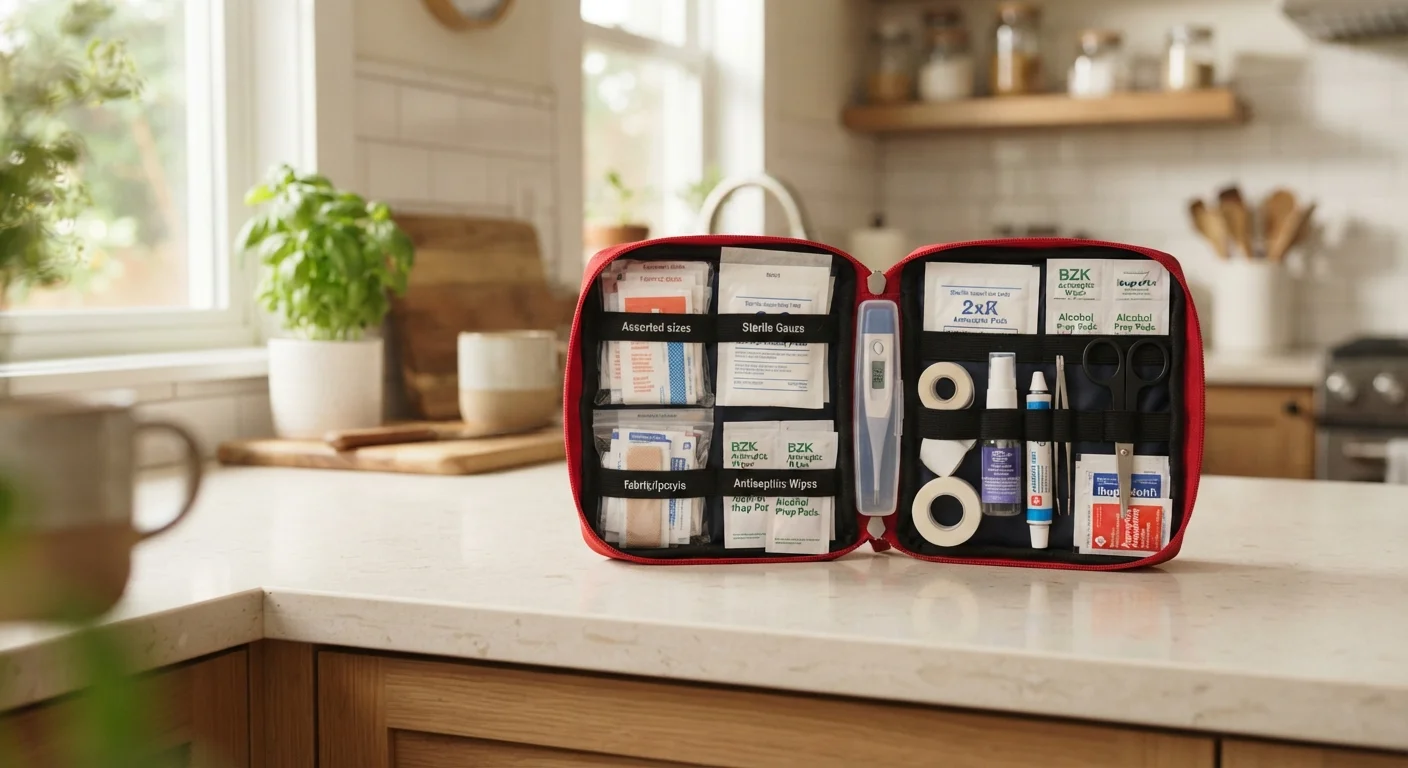
The tools below cover what most families need to handle minor injuries and monitor symptoms at home. Some items are used daily; others sit in the kit for months before they are needed. Both kinds matter.
Lidded plastic storage bin or dedicated first aid bag
Keeps all supplies organized, protected from moisture, and easy to carry to an injury site.
Permanent marker and labels
Marks expiration dates on items and labels compartments inside the kit for fast access.
Inventory checklist (printed)
Tracks what is in the kit and when items were last restocked, making annual reviews faster.
Pharmacy or warehouse club membership
Bulk packaging of bandages, gloves, and gauze at warehouse clubs can reduce per-item cost significantly.
The complete first aid kit checklist
Work through each group below to audit what you already have and note what still needs to be added. Items marked "must" are the foundation. Items marked "should" round out the kit for common family scenarios. "Nice to have" items add convenience without being essential.
Wound care
Fever and pain management
Burns, sprains, and swelling
Tools and safety equipment
Allergy and digestive relief
Documentation and reference
Families with young children, older adults, or members who have chronic conditions may need additional items specific to those circumstances. Talk with your family's healthcare providers about what else belongs in your kit based on your household's needs.
Storing, maintaining, and traveling with your kit
A first aid kit works only if it is accessible and up to date. Store it in a cool, dry location away from direct sunlight, out of reach of young children but known to every adult in the household. A labeled plastic bin or a dedicated compartment in a cabinet works well.
Check the kit at least once a year. Look for items that have expired, run out, or been used and not replaced. Expired antiseptics and medications should be disposed of according to local guidelines, not simply thrown in the trash or flushed. Many pharmacies offer medication take-back programs.
Medication expiration dates matter
Over-the-counter medications lose potency and can change in composition after their expiration date. Do not assume an expired pain reliever or antihistamine is safe to use. Remove expired items from the kit promptly and replace them. If you are unsure how to dispose of a medication, your local pharmacy's take-back program is the most reliable option.
If your family travels by car, a smaller travel version of this kit is worth putting together. Our family road trip planning guide and vacation planning checklist both include reminders to pack medical basics before you leave. A first aid kit pairs naturally with the broader goal of preventive care at home; our article on affordable preventive care covers free and low-cost services that complement what you have in the kit.
This article is for informational purposes only and is not medical advice. Always consult a qualified healthcare professional for personal medical decisions, symptoms, or emergencies.