

Key Takeaways
Option A
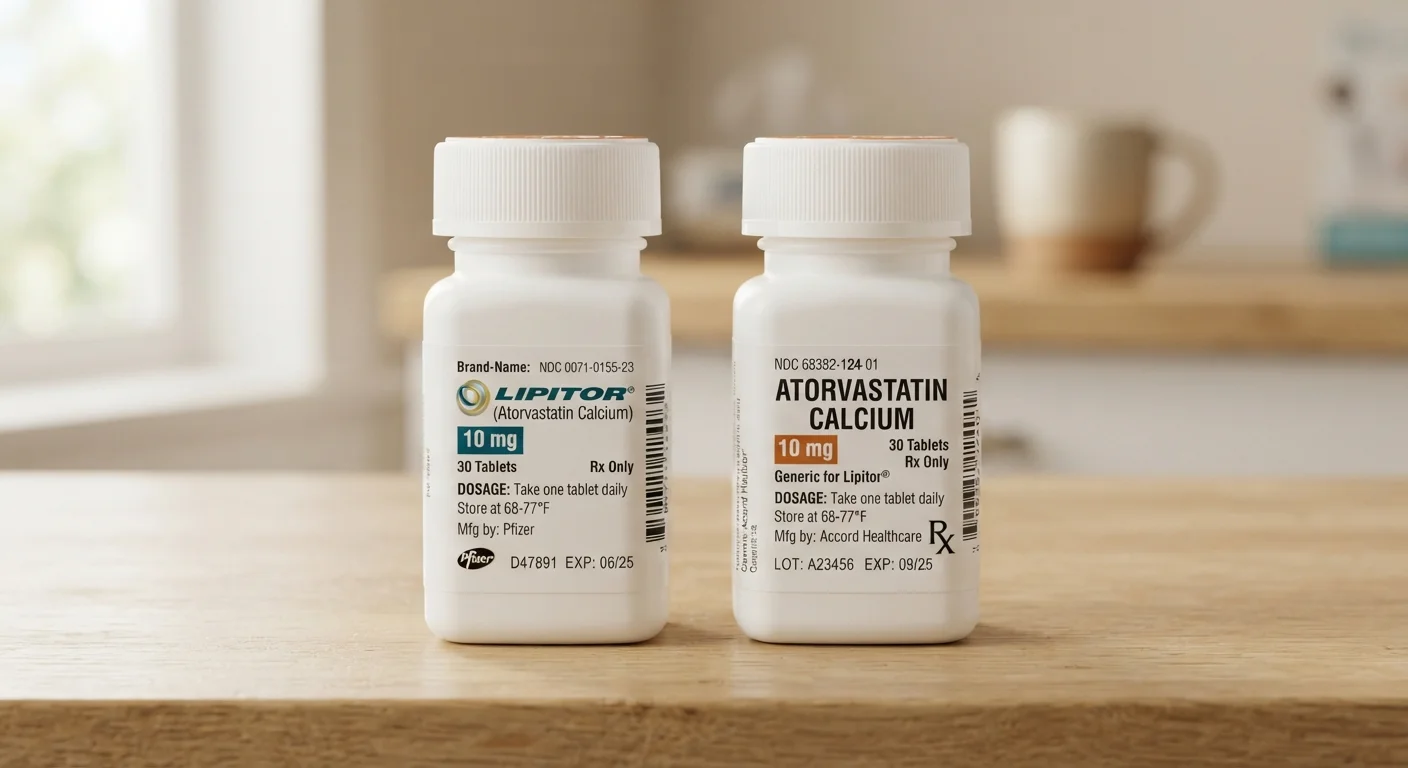
Brand-name medications
The original, patent-protected formulation.
Best for: Situations where a specific inactive ingredient, delivery mechanism, or narrow-therapeutic-index drug requires the exact manufacturer's product, as confirmed by a prescriber.
Option B
Generic medications
The bioequivalent, lower-cost alternative.
Best for: Most everyday prescriptions where the active ingredient and dosage form are identical and cost savings matter for the family budget.
If your family is managing routine prescriptions on a tight budget
Generic medications
For most common conditions, generics are therapeutically equivalent to brand-name drugs and carry substantially lower out-of-pocket costs.
If you or a family member takes a narrow-therapeutic-index medication
Brand-name medications
Small differences in absorption rates can matter more for drugs like certain anticonvulsants or blood thinners. Discuss consistency of formulation with your prescriber.
If a family member has known allergies to dyes, fillers, or coatings
Brand-name medications
Inactive ingredients vary across manufacturers, and a specific formulation may be necessary to avoid an allergic response. A pharmacist can help identify which products to avoid.
If your insurer or pharmacy benefit covers only generics
Generic medications
Many insurance plans tier generics at the lowest copay level, making them the most accessible option for ongoing or maintenance medications.
What the FDA actually requires of generic drugs
When the U.S. Food and Drug Administration (FDA) approves a generic drug, it must meet a specific legal standard: the generic has to be bioequivalent to the brand-name version. Bioequivalence means the generic delivers the same active ingredient into the bloodstream at the same rate and in the same amount, within an accepted range of variation that the FDA has determined to be clinically insignificant.
The active ingredient, strength, dosage form (tablet, capsule, liquid), and route of administration must all match the original. What can differ are inactive ingredients, sometimes called excipients, such as fillers, binders, dyes, and coatings. These components affect how a tablet holds together or tastes, not how the active ingredient works in the body.
Generic manufacturers also must meet the same FDA manufacturing quality standards as brand-name companies. The idea that generics are produced in substandard facilities is not supported by FDA oversight data. For most families, this means the generic version of a common medication is a clinically sound choice.
| Criterion | Brand-name medications | Generic medications |
|---|---|---|
| Active ingredient | Original patented compound | Identical to brand-name |
| FDA bioequivalence required | N/A (originator) | Yes, legally required |
| Inactive ingredients | Specific to manufacturer | May differ by manufacturer |
| Average cost | Higher out-of-pocket | 80-85% less on average |
| Insurance tier | Higher copay tier typical | Lowest copay tier typical |
| NTI drug consideration | Consistent formulation | Discuss with prescriber |
| Manufacturing standards | FDA-regulated | Same FDA standards apply |
When the difference can actually matter
For most medications, switching to a generic is straightforward. However, a small category of drugs called narrow-therapeutic-index (NTI) medications warrants more careful consideration. NTI drugs are those where a relatively small change in blood concentration can shift the drug from effective to toxic or ineffective. Examples include certain anticonvulsants, thyroid hormones, and anticoagulants (blood thinners).
Because each generic manufacturer may formulate its version slightly differently within the FDA's accepted bioequivalence window, some prescribers prefer that patients on NTI drugs stay with one consistent formulation, whether that is the brand-name or a single generic manufacturer's product. This is not a reason to avoid generics categorically; it is a reason to have a conversation with your prescriber or pharmacist when these specific drug classes are involved.
Inactive ingredient differences can also matter if someone has a documented allergy or sensitivity to a dye, lactose filler, or coating used in one formulation but not another. This situation is uncommon but real. A pharmacist can review the inactive ingredient list for any product and help identify alternatives.
For general health context, see our guide to affordable preventive care, which covers how insurance typically handles prescription tiers alongside other covered services.
This article provides general health information only and is not a substitute for advice from a qualified healthcare professional. Always speak with your prescriber or pharmacist before making changes to any medication regimen.
The cost picture for families
80-85%
Average generic cost savings vs. brand-name
According to the U.S. Food and Drug Administration, generics cost 80 to 85 percent less on average than brand-name equivalents.
90%
Share of U.S. prescriptions filled as generics
The FDA reports that generics account for roughly 9 in 10 prescriptions dispensed in the United States.
Same active ingredient
FDA bioequivalence requirement
FDA approval for any generic drug requires the same active ingredient, strength, dosage form, and route of administration as the reference brand-name drug.
The price gap between brand-name and generic medications is substantial. The FDA has stated that generics cost 80 to 85 percent less on average than their brand-name equivalents. For a family managing multiple prescriptions, that difference compounds quickly over the course of a year.
Health insurance plans typically place generics in the lowest copay tier. When a brand-name drug has no generic equivalent yet, some plans require prior authorization or a higher cost-sharing amount. Asking your prescriber whether a generic alternative exists for any new prescription is a practical habit that costs nothing and can save a family hundreds of dollars annually.
Some pharmacies and pharmacy benefit programs also offer generic drug lists at fixed low prices, independent of insurance. These programs vary by pharmacy and change over time, so it is worth asking at the counter what options are available for a specific medication rather than assuming one price applies everywhere.
How to have a productive conversation with your pharmacist
Pharmacists are an underused resource for families navigating medication costs. When picking up a prescription, asking three straightforward questions can clarify a lot: Is there a generic available? Are the inactive ingredients the same or different from the brand? And does my insurance cover the generic at a lower tier?
If you are switching from a brand-name to a generic for the first time, your pharmacist can note the change in your file and flag it if any concerns arise at future fills. For children, elderly family members, or anyone with multiple health conditions, a pharmacist review of the full medication list (sometimes called a medication therapy management session) can catch interactions and cost-saving opportunities simultaneously. Many insurance plans cover this service at no extra charge.
Decisions about specific medications, dosages, and whether to switch formulations always belong with your healthcare provider. The pharmacist conversation is a starting point, not a replacement for that clinical relationship.