

Key Takeaways
Summary
22 items · 2 to 4 hours
Why winterizing matters before temperatures drop
Cold weather puts pressure on a home in ways that are easy to overlook until something goes wrong. A drafty window raises heating costs slowly; a frozen pipe fails suddenly and expensively. Working through a structured checklist before the first hard freeze lets you catch small problems while the fixes are still simple and cheap.
The tasks below are organized by area of the home. Most require only basic hand tools, caulk, weatherstripping, or pipe insulation available at any hardware store. A few involve systems, such as your furnace or roof, where calling a licensed professional is the right call. Those items are flagged clearly.
If you are also preparing your vehicle for the season, the same pre-winter discipline applies there. See our seasonal car care checklist for a comparable walkthrough on tires, fluids, and safety systems.
Gas appliances require a licensed technician
Never attempt to adjust, repair, or seal connections on a gas furnace, boiler, or water heater yourself. Gas work that is done incorrectly can cause carbon monoxide poisoning or fire. Schedule an annual inspection with a licensed HVAC technician before the heating season begins.
Tools and materials you will need
Gather these before you start so you can move through each area without stopping.
Caulk gun and silicone or latex caulk
Seals fixed gaps around window frames, door frames, and pipe penetrations through exterior walls.
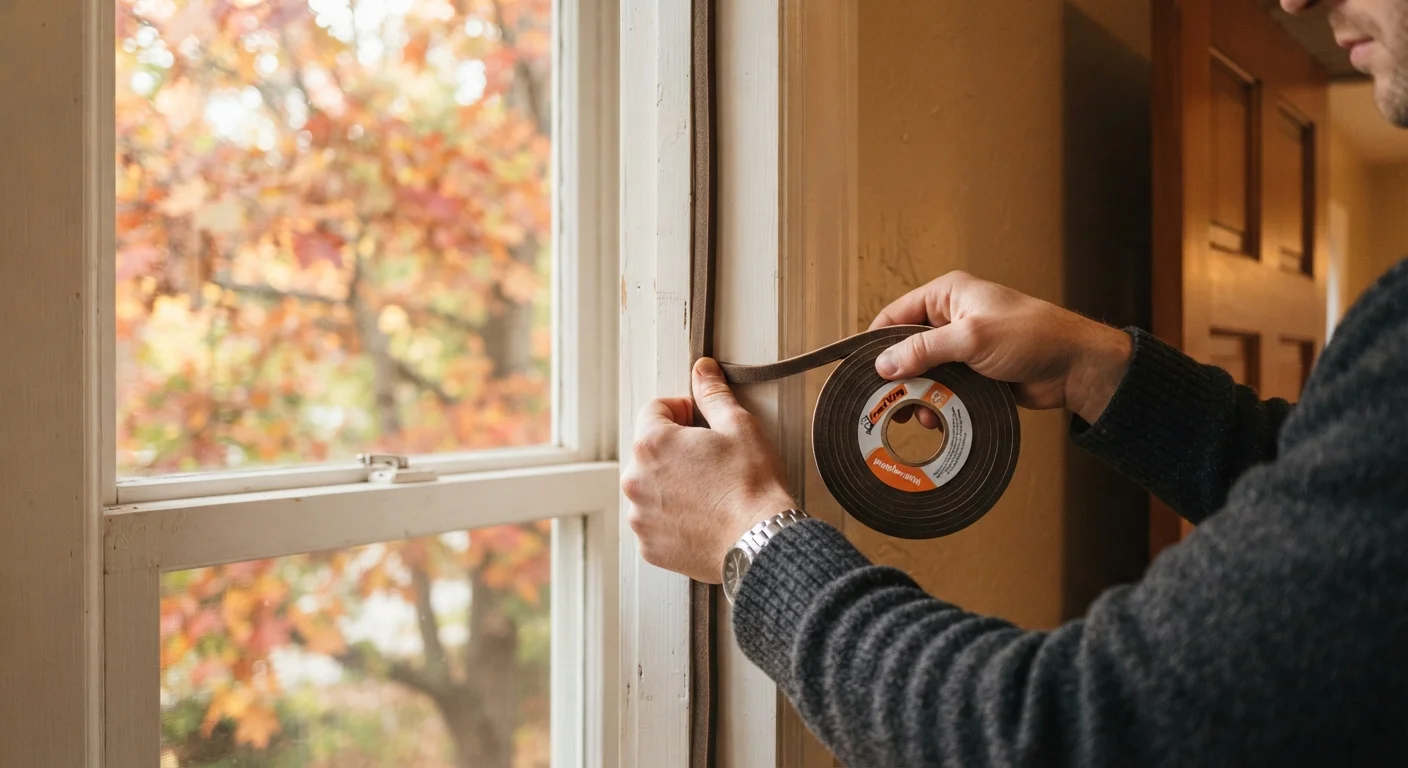
Weatherstripping foam tape or V-strip
Fills moving gaps between door and window sashes and their frames.
Foam pipe insulation
Wraps exposed water pipes in unheated spaces to reduce freeze risk.
Expandable spray foam (minimal-expanding)
Fills larger irregular gaps around pipes, wires, and framing penetrations in exterior walls.
Furnace filter (correct size for your unit)
Replaces the existing filter to restore airflow and heating efficiency.
Door sweep
Attaches to the bottom of exterior doors to block drafts and insects.
Gutter cleaning tools (scoop and hose nozzle)
Removes leaf debris from gutters so meltwater drains properly.
Window insulation film kit
Adds a secondary insulating layer to single-pane windows without replacing them.
The full weatherproofing checklist
Work room by room from the outside in. Start with the building envelope, move to mechanical systems, then finish with interior details. Checking items off as you go helps avoid skipping areas that are easy to forget, such as the attic hatch or crawl space access door.
Building envelope: doors and windows
Roof, gutters, and attic
Heating system and ventilation
Pipes and water systems
A note on permits and professional work
Several tasks on this list, specifically any work on gas lines, electrical systems, or structural elements, require a licensed contractor and may need a permit depending on your municipality. Sealing attic bypasses, adding blown-in insulation, or replacing a gas furnace are not DIY projects for most homeowners. When in doubt, get a quote from a licensed professional before starting.
A home energy audit, offered by many utility companies at low or no cost, can tell you precisely where your home loses the most heat. That information helps you prioritize spending on insulation and sealing rather than guessing.
Do not seal attic ventilation
Attic vents, soffit vents, and ridge vents must stay open year-round. Blocking them traps moisture, which leads to mold growth and structural rot. Seal only the attic floor (the boundary between living space and attic), never the attic's exterior vents.
Expanding foam can damage window frames
Use only minimal-expanding foam around window and door frames. Standard expanding foam exerts enough pressure to bow frames out of square, making windows and doors difficult to open or close properly. Read product labels carefully before applying.