

Key Takeaways
Why family tech regret is so predictable
Most electronics regret follows a short list of patterns. A family sees a deal, imagines a problem being solved, and buys before checking whether the problem is real. The purchase arrives, gets used for two weeks, and then sits. The money is gone, and the original friction is still there.
This is not about being impulsive or careless. Retailers and product pages are built to generate confidence in a purchase. Spec sheets amplify numbers that sound impressive but rarely translate to noticeable differences in everyday use. Understanding the thought patterns behind each regret helps more than generic advice to "do your research."
For a broader look at where household spending quietly escapes, see how grocery bills creep up for a parallel set of patterns.
Buying a large-screen TV based on room size estimates that turn out to be wrong.
Why it happens: Showroom floors are spacious, so a 75-inch screen looks proportionate there. At home, in a room half the size, the same screen can feel overwhelming or require uncomfortable viewing angles.
Purchasing a streaming stick or box for a TV that already has a smart platform built in.
Why it happens: Built-in TV software has a reputation for being slow or limited, and that reputation is sometimes earned. But newer televisions often run platforms that are fast enough for everyday use, and families buy a streaming device without testing what they already have.
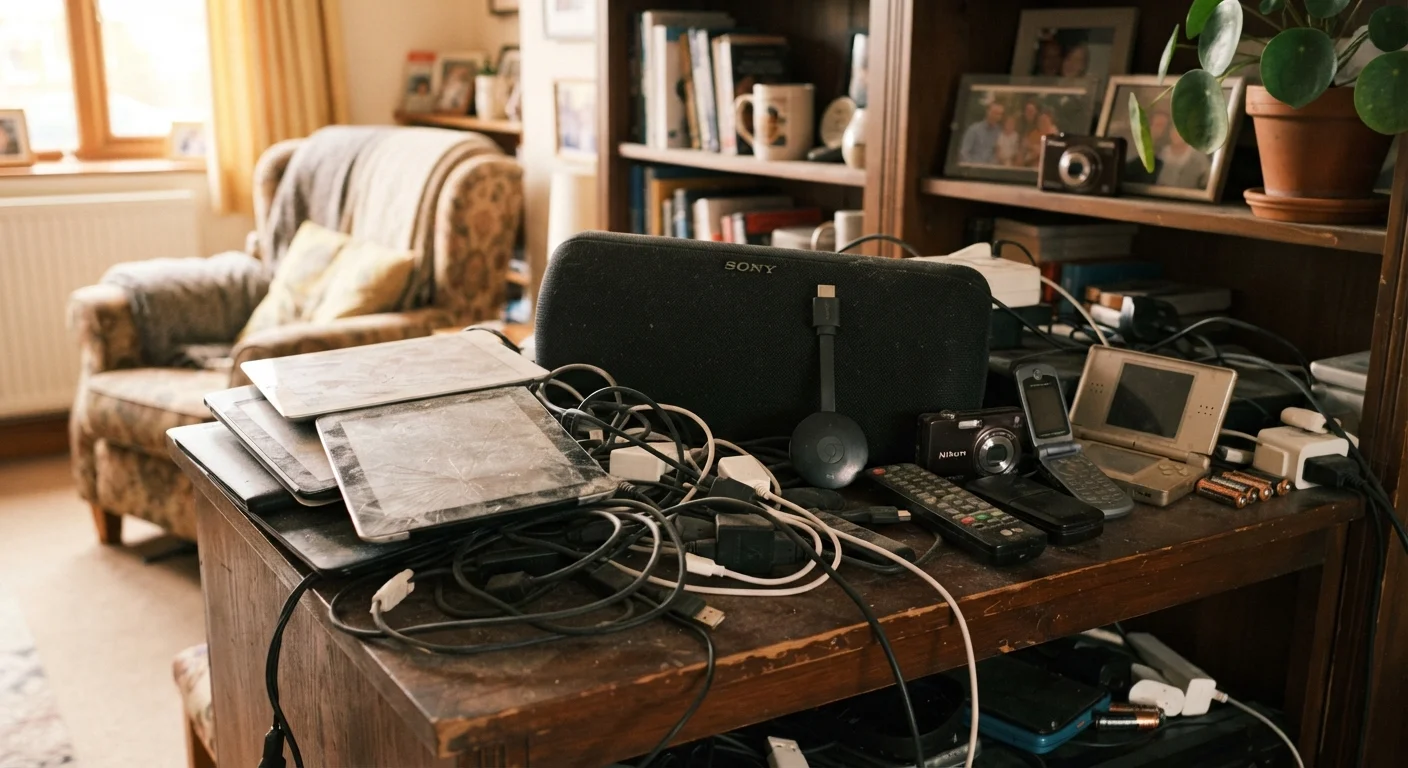
Buying multiple cheap tablets instead of one mid-range shared device.
Why it happens: Per-unit price looks attractive, and the idea of every child having their own device feels fair. In practice, cheap tablets often have underpowered processors, short battery life, and screens that crack easily, which means replacing them more frequently.
Paying for an extended warranty that duplicates existing coverage.
Why it happens: The retailer presents the warranty at checkout when the purchase feels exciting and the cost feels small relative to the device. Families rarely check whether their credit card already includes purchase protection or whether the manufacturer warranty covers the same period.
Buying smart home devices on the strength of a single use case that turns out to be trivial.
Why it happens: A smart plug or voice-controlled light switch solves one visible inconvenience. Families buy several and then realize the setup time, app management, and occasional glitches outweigh the benefit for their household.
What to do before any tech purchase
One practical step is a household tech audit before buying anything new. List every device your family currently owns, what each one does, and how often it is actually used. That exercise alone tends to kill several purchases before they happen. A structured approach to that audit can surface overlap you did not know existed.
For devices that do break or wear out, consider whether a certified refurbished unit covers the need before defaulting to new. Refurbished vs. new electronics breaks down what the grading systems actually mean and where the real risks sit.
When a device is still functional but feeling slow, replacement is often premature. Extending device life covers the maintenance habits that keep phones and tablets running for years past the point most people give up on them.
34%
Households with unused devices within 6 months
Consumer Reports survey data has consistently found that a significant share of electronics purchases go largely unused within the first six months after buying.
2x
Typical replacement rate for budget tablets vs. mid-range
Consumer technology analysts have noted that low-cost tablets are replaced roughly twice as often as mid-range models over a three-year period, erasing the initial savings.