

Key Takeaways
Why grocery bills drift upward without obvious cause
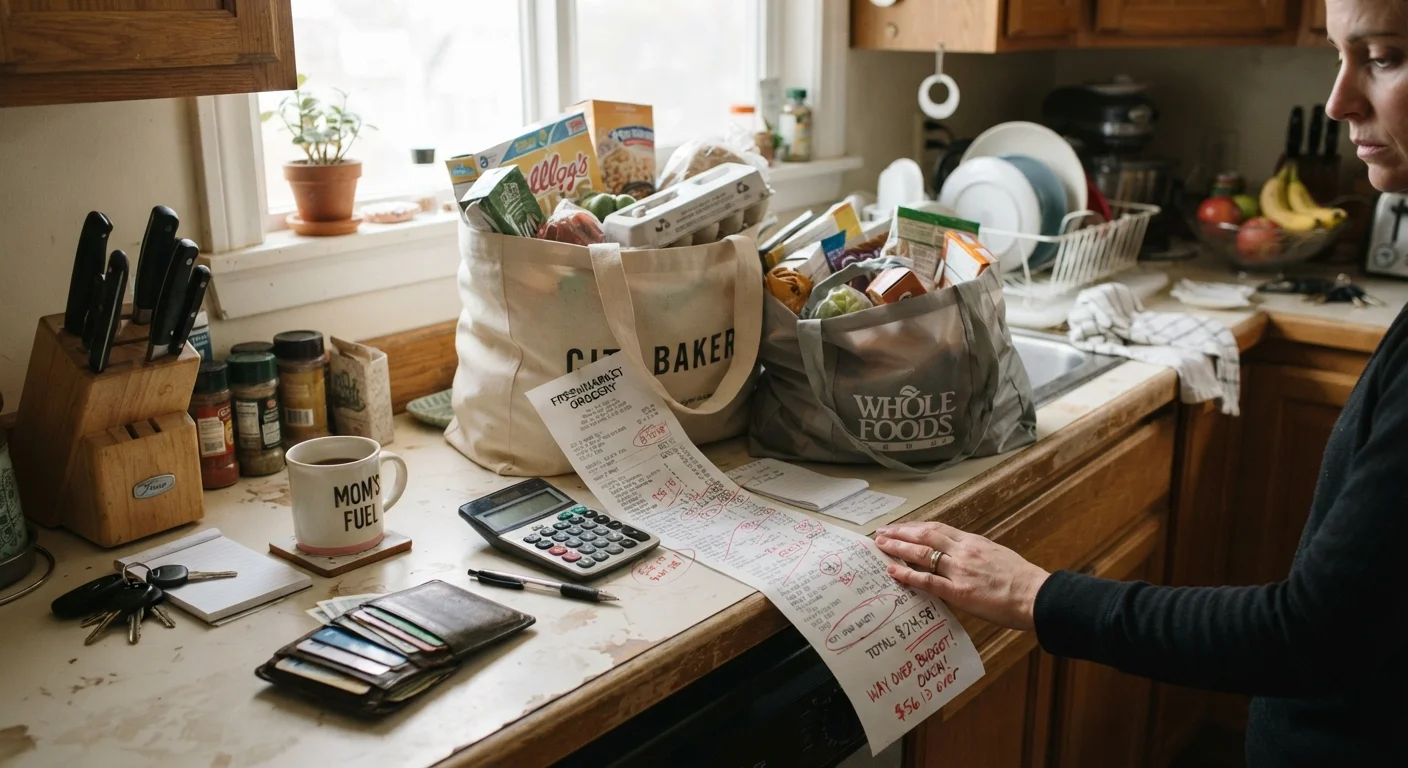
Grocery spending rarely spikes in one dramatic event. It grows through small, repeated decisions: an extra snack pack here, a convenience item there, a forgotten duplicate of something already in the pantry. Over a month, those additions can push a family's food budget well past what was intended.
Food costs are a genuine pressure point for American households. The U.S. Bureau of Labor Statistics tracks food-at-home as one of the larger fixed categories in household budgets, and even modest percentage increases translate to real dollar amounts at the family level. Understanding where the money actually goes is covered in detail in a category-by-category household spending breakdown, which puts grocery costs in context alongside other major expenses.
The errors that inflate grocery bills are almost always habitual rather than one-time mistakes. That is actually useful: habits can be changed systematically, and even adjusting two or three of the patterns below tends to produce visible results within a few weeks.
~$475
Average monthly food-at-home spending per U.S. household
According to the U.S. Bureau of Labor Statistics Consumer Expenditure Survey, food at home represents one of the largest recurring household expense categories.
30-40%
Estimated share of food purchased but not consumed
The USDA has estimated that a substantial portion of food bought at the retail level is ultimately wasted, much of it from households buying without a clear plan.
Up to 25%
Potential savings by switching to store-brand staples
Consumer advocacy research has found that store-brand grocery items frequently cost less per unit than name-brand equivalents across common staple categories.
The mistakes that quietly add up
The list below covers the most common patterns that push grocery spending higher than it needs to be. For each one, the underlying reason matters as much as the fix, because understanding why the habit forms makes it easier to change.
Shopping without a meal plan or list.
Why it happens: Busy families often head to the store with a general idea of what they need rather than a concrete plan, assuming they will figure it out in the aisles.
Defaulting to convenience and pre-packaged items.
Why it happens: Pre-cut vegetables, single-serve snack packs, and marinated proteins save preparation time, which feels worth the premium when schedules are tight.
Not checking what is already in the pantry or freezer before shopping.
Why it happens: Without a quick inventory, it is easy to assume the household is out of something when a spare is sitting at the back of a shelf.
Comparing sticker prices instead of unit prices.
Why it happens: The larger package looks like the obvious deal, but that assumption is not always correct, and smaller sizes sometimes carry a lower per-ounce cost.
Shopping hungry or with children who are also hungry.
Why it happens: Hunger intensifies the appeal of ready-to-eat or high-calorie items, and children's requests in the aisles are hard to redirect when everyone is running low on patience.
Ignoring store-brand options across all categories.
Why it happens: Brand familiarity built through advertising leads many families to assume name brands are meaningfully better in quality.
Nutrition does not have to suffer when a family cuts grocery costs. Research-backed approaches to feeding a family well on a tighter budget are outlined in what nutrition science supports about eating well on a tight grocery budget.
Store layout is not neutral
Grocery stores position high-margin items at eye level, place staples toward the back, and use end-cap displays to suggest deals that may not be deals at all. End-cap placement does not indicate a sale price; the item is simply more visible. Checking the shelf tag unit price applies to end-cap items just as it does to anything else on the regular shelf.
Putting changes into a broader budget context
Grocery adjustments work best when they connect to a household budget that accounts for irregular expenses, not just fixed monthly bills. A family that saves $80 a month at the grocery store but has no system for capturing and redirecting that money often finds it absorbed elsewhere without impact. A household budgeting framework that holds up month to month addresses how to build that structure around real family life, including kids' activities and unpredictable costs.
It is also worth noting that groceries are rarely the only spending category with room for similar analysis. Recurring charges, for instance, follow the same pattern of small amounts that compound quietly. A step-by-step subscription audit uses the same inventory-and-review logic that applies to pantry management, applied instead to monthly services.
This article is for general informational purposes only and does not constitute financial advice. Consult a qualified financial professional for guidance specific to your household's situation.