

Key Takeaways
Why budget eating and good nutrition are compatible
A widespread assumption holds that eating nutritiously costs more. Research from nutrition economists does not support this uniformly. Studies published in journals such as PLOS ONE have found that the least expensive dietary patterns, when built around whole foods rather than processed convenience items, can meet most of the dietary reference intakes set by the USDA and the National Academies of Sciences.
The gap between a nutrient-dense diet and an expensive one often comes down to which foods anchor the meal plan. Whole grains, legumes, eggs, canned fish, and seasonal produce provide proteins, fiber, vitamins, and minerals at a fraction of the cost of heavily marketed packaged foods. Families who organize their grocery spending around these categories consistently find more room in their household budget without sacrificing dietary quality.
This article provides general nutrition information and is not a substitute for advice from a registered dietitian or qualified healthcare professional.
Staple foods with strong nutritional value per dollar
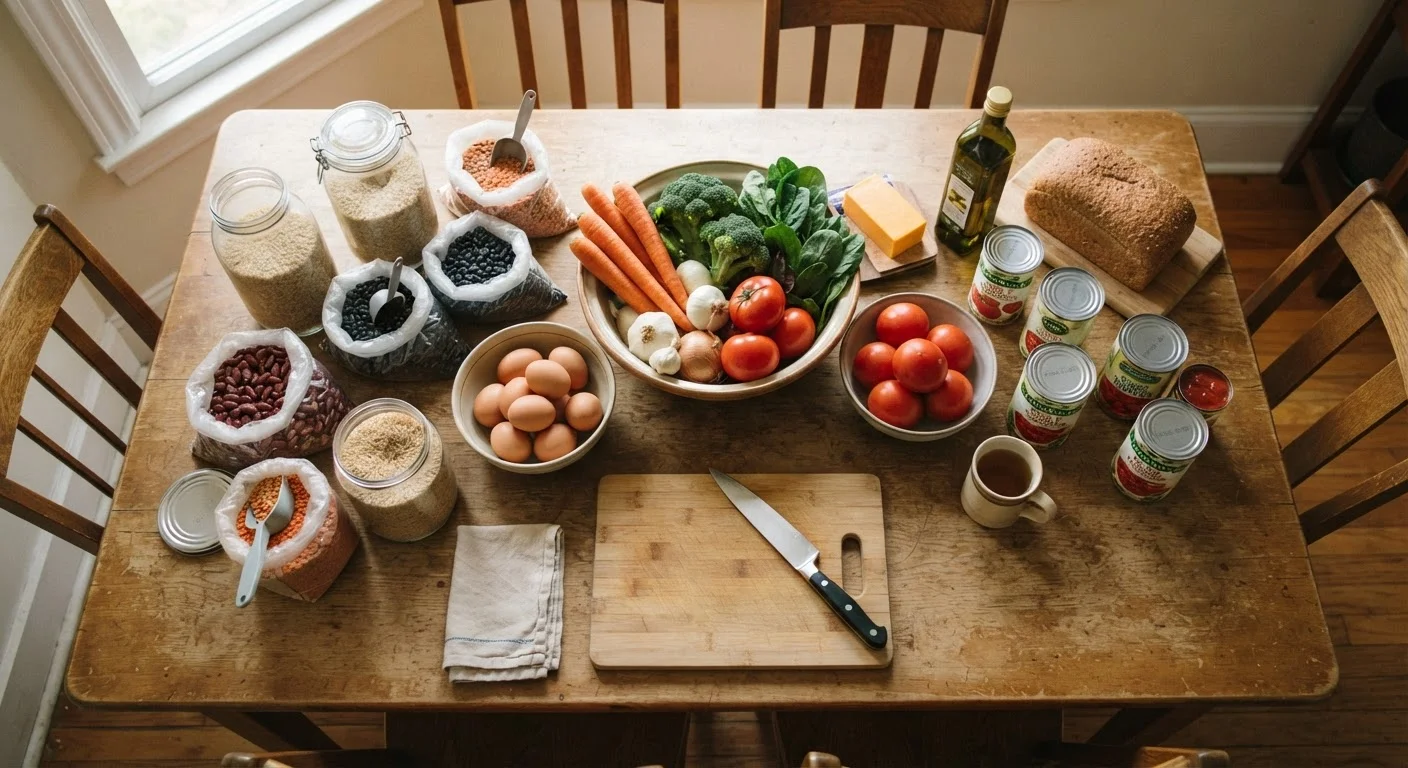
Certain foods earn their place in a budget grocery list because they are dense in nutrients relative to their cost. The following categories have consistent support from nutritional science:
- Dried and canned legumes (lentils, black beans, chickpeas): High in plant protein, fiber, iron, and folate. Dried lentils in particular cost very little per pound and require no soaking.
- Whole grains (brown rice, oats, barley): Provide complex carbohydrates, B vitamins, and fiber. Oats purchased in bulk containers are among the lowest-cost breakfast options available.
- Eggs: A complete protein source containing all essential amino acids, along with choline and vitamin D. Per gram of protein, eggs compare favorably with most other animal foods.
- Frozen vegetables: Research from the University of California, Davis, and other institutions has documented that frozen vegetables often retain comparable levels of vitamins C and E to fresh, because they are processed quickly after harvest.
- Canned tomatoes and tomato-based products: Rich in lycopene and vitamin C, and far more affordable than fresh tomatoes outside of peak season.
- Canned or frozen fish (sardines, tuna, salmon): Good sources of omega-3 fatty acids and protein at a lower price point than fresh fish.
Build meals around legumes and whole grains as the primary base, with vegetables and smaller amounts of protein added around them.
Legumes and grains are the most affordable nutrient-dense foods available, providing protein, fiber, and complex carbohydrates. Reversing the typical plate structure so that these foods dominate reduces cost without reducing nutritional adequacy.
Choose frozen vegetables over fresh when fresh options are out of season or priced high.
Frozen vegetables are harvested at peak ripeness and processed quickly, preserving much of their nutrient content. They also produce zero spoilage waste, which is a meaningful cost advantage over fresh produce that goes unused.
Buy dried beans and lentils rather than canned when time allows for home cooking.
Dried legumes cost roughly a third to a half as much per serving as their canned equivalents. A pound of dried lentils or black beans yields many servings and stores well for months in a sealed container.
Use eggs as a frequent protein source across multiple meal types, including dinner.
Eggs are nutritionally complete, versatile, and relatively shelf-stable. They work across breakfast, lunch, and dinner preparations, making them one of the most flexible budget proteins available.
Plan meals for the week before writing the grocery list, then shop specifically to that plan.
Unplanned grocery shopping is the primary mechanism through which food budgets expand. A written meal plan converts shopping into a deliberate act with a defined scope, reducing impulse purchases and expensive gaps filled by convenience food.
Planning and shopping habits that reduce waste and cost
Buying nutritious staples only helps if families use them before they go bad. Food waste is one of the most consistent drivers of inflated grocery bills. The USDA estimates that households discard a substantial portion of purchased food each week, which means dollars spent on nutritious items often go uneaten.
A few habit shifts address this directly. Writing a meal plan before shopping, even a rough one covering four or five dinners, allows purchases to match what will actually be cooked. Shopping with a list built from that plan limits unplanned additions. Checking what commonly inflates grocery bills can also help families identify their specific weak spots.
Batch cooking is another practical tool. Preparing a large pot of beans or grains at the start of the week makes it easy to build multiple different meals from one cooking session, reducing the temptation to buy convenience foods on busy evenings.
Protein on a limited budget: what the science says
Protein is often the most expensive line item in a family's grocery cart, particularly when it means buying fresh meat every week. Nutritional guidance from organizations including the Academy of Nutrition and Dietetics supports the idea that a variety of plant proteins can meet daily protein needs for most healthy adults and children when eaten across meals throughout the day.
Lentils, black beans, edamame, tofu, peanut butter, and whole grains all contribute meaningful amounts of protein. Pairing legumes with grains across the course of a day (not necessarily in the same meal) ensures a full range of essential amino acids. This approach is both well-supported by research and substantially less expensive than centering every meal on animal protein.
Eggs and canned fish remain cost-effective animal protein sources for families who prefer to include them. Families with specific nutritional concerns, growing children, pregnant women, or members managing chronic conditions should speak with a registered dietitian before making significant dietary changes.