

Key Takeaways
Why this topic stirs so much worry
Parents receive a steady stream of warnings about screens and sleep, some from credible health organizations, others from viral headlines that flatten nuanced research into absolute claims. The anxiety is understandable. Sleep is genuinely important for children's development, and screens are everywhere in family life. What gets lost is the difference between a real but modest effect and a catastrophic one.
This article draws on published research and guidance from pediatric health organizations to separate what the evidence supports from what it overstates. It is general health information, not medical advice. If your child has persistent sleep difficulties, a pediatrician is the right resource.
Myth
All screen time before bed harms children's sleep equally, regardless of what they are watching or doing.
Fact
Content type and arousal level matter considerably. Calm, slow-paced content has a different effect on the nervous system than fast-paced action games or videos.
Research published in pediatric sleep journals consistently finds that stimulating, emotionally activating content, such as action games or suspenseful videos, is more disruptive to sleep onset than passive, slow-paced content. The distinction between a video call with grandparents and a high-intensity game matters when evaluating likely sleep impact. Treating all screen exposure as equivalent overstates the harm of lower-stimulation use and may cause families to discard useful digital tools unnecessarily.
Myth
Blue light from screens is the primary reason screens disrupt children's sleep.
Fact
Blue light is one contributing factor, but psychological stimulation and delayed bedtime habits are at least as relevant in most cases.
Blue light from screens can suppress melatonin production, which is a real physiological effect. However, the magnitude of this effect varies considerably depending on screen brightness, distance, duration, and individual sensitivity. Many researchers point out that the behavioral aspects of late-night screen use, staying up longer, feeling mentally activated, or replacing sleep time with content consumption, likely account for a larger share of the observed disruption than blue light alone. Focusing only on blue light can distract from the simpler question of when and how long a child is awake before sleep.
Myth
Setting a strict no-screens rule is the only effective way to protect a child's sleep.
Fact
Consistent bedtime routines, regardless of whether a screen is present, have stronger evidence for improving sleep than blanket prohibitions alone.
The AAP and sleep researchers agree that routine is one of the most evidence-supported tools for children's sleep. A child who watches a calm show for 20 minutes as part of a predictable, consistent wind-down sequence may sleep better than one with an inconsistent bedtime despite zero screens. That said, screens in the bedroom, particularly smartphones for teenagers, are associated with worse sleep outcomes across multiple studies. The practical takeaway is that removing screens from bedrooms and setting a consistent schedule matters more than eliminating all screen contact in the hours before sleep.
Myth
Teenagers are affected by screens and sleep in the same way young children are.
Fact
Adolescents have a biologically later sleep phase, and smartphone use interacts with this shift in ways that differ from the effects seen in younger children.
Puberty shifts the circadian rhythm later, so teenagers naturally feel awake later in the evening. Smartphone use at night compounds this by adding social stimulation, notifications, and blue light at a time when the brain is already inclined toward wakefulness. Research from the National Institute of Mental Health and others indicates that sleep deprivation in adolescents has measurable effects on mood, attention, and academic performance. The concern for teens is real, but it is different in character from the concern for toddlers or school-age children, and interventions should reflect that difference.
Myth
If a child falls asleep while using a screen, the screen is not affecting their sleep quality.
Fact
Falling asleep with a screen on may reduce sleep quality even when the child appears to transition smoothly into sleep.
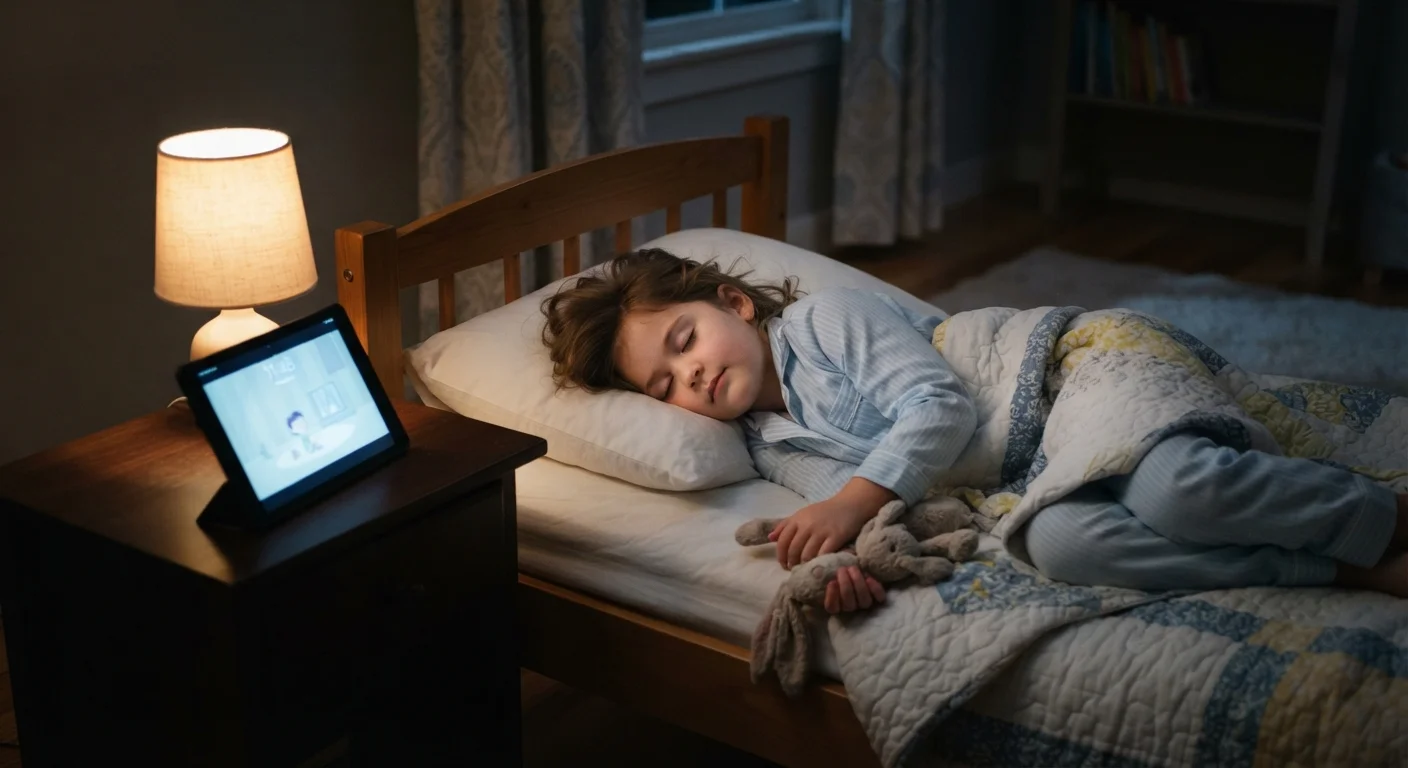
Sleep onset during screen use does not mean the screen had no effect. Stimulating audio or light can influence early sleep stages and may increase nighttime waking. For younger children especially, the absence of a consistent, calm pre-sleep routine has been linked to more fragmented sleep and more frequent night waking, even when the child initially falls asleep without difficulty. The quality and continuity of sleep across the night matters alongside how quickly a child falls asleep.
What the research does and does not show
The strongest and most consistent finding in the literature is that screens used close to bedtime, particularly those with stimulating content, are associated with later sleep onset and shorter sleep duration in children. The American Academy of Pediatrics (AAP) recommends avoiding screens for children under 18 months (except video chatting) and limiting use to one hour per day for children aged 2 to 5, with consistent limits continuing for older children and teens.
However, association is not causation. Children who use screens late at night may also have less consistent bedtime routines, more caffeinated beverages, or higher stress levels at home. Isolating screen time as the single driver is methodologically difficult, and many studies rely on parent-reported data, which introduces variability.
The AAP and the National Sleep Foundation both support screen-free wind-down periods before bed, noting that calm, predictable routines have the strongest evidence for improving sleep quality in children of all ages. If your household manages multiple devices, the shared tablet setup guide covers practical ways to set time limits across age groups without constant negotiation.
Building habits that actually help
The good news is that the most evidence-supported strategies cost nothing. A consistent wind-down routine, a regular sleep and wake time, and moving devices out of the bedroom before bed are practical, free changes that families can make regardless of budget.
For families who want to think more broadly about which devices genuinely serve their household versus which ones add noise and friction, the family tech audit is a useful starting point. And if stress or anxiety in the home is affecting children's sleep more broadly, low-cost mental health strategies for families covers habits that support emotional wellbeing without significant expense.
Sleep problems in children have many possible causes. Screens may be a contributing factor in some cases, but ruling out other causes, such as sleep apnea, anxiety, or irregular schedules, matters just as much as adjusting screen habits. A pediatrician can help sort through what is driving a particular child's difficulties.
This article is for informational purposes only and is not medical advice. Please consult a qualified healthcare professional for concerns about your child's health or sleep.