

Key Takeaways
Start here
Why composting makes sense for home gardeners
Next
Choosing a composting method
Then
What to put in and what to keep out
Build on it
Balancing greens and browns
Keep it running
Managing and troubleshooting your pile
Put it to work
Using finished compost in your garden
Why composting makes sense for home gardeners
Bagged soil amendments and fertilizers add up over a growing season. Composting sidesteps most of that cost by converting material you already discard: vegetable peels, coffee grounds, eggshells, and yard clippings. The result is a dark, crumbly amendment that improves soil structure, adds nutrients, and supports beneficial soil organisms.
Beyond the savings, composting diverts organic waste from landfills, where it would decompose without oxygen and produce methane. A household compost bin processes that material into something genuinely useful instead.
If you plan to grow food in raised beds, pairing home compost with good bed construction can significantly reduce your input costs. Our guide to affordable raised bed materials covers which bed options hold up over time on a tight budget.
Choosing a composting method
Three methods suit most home gardeners.
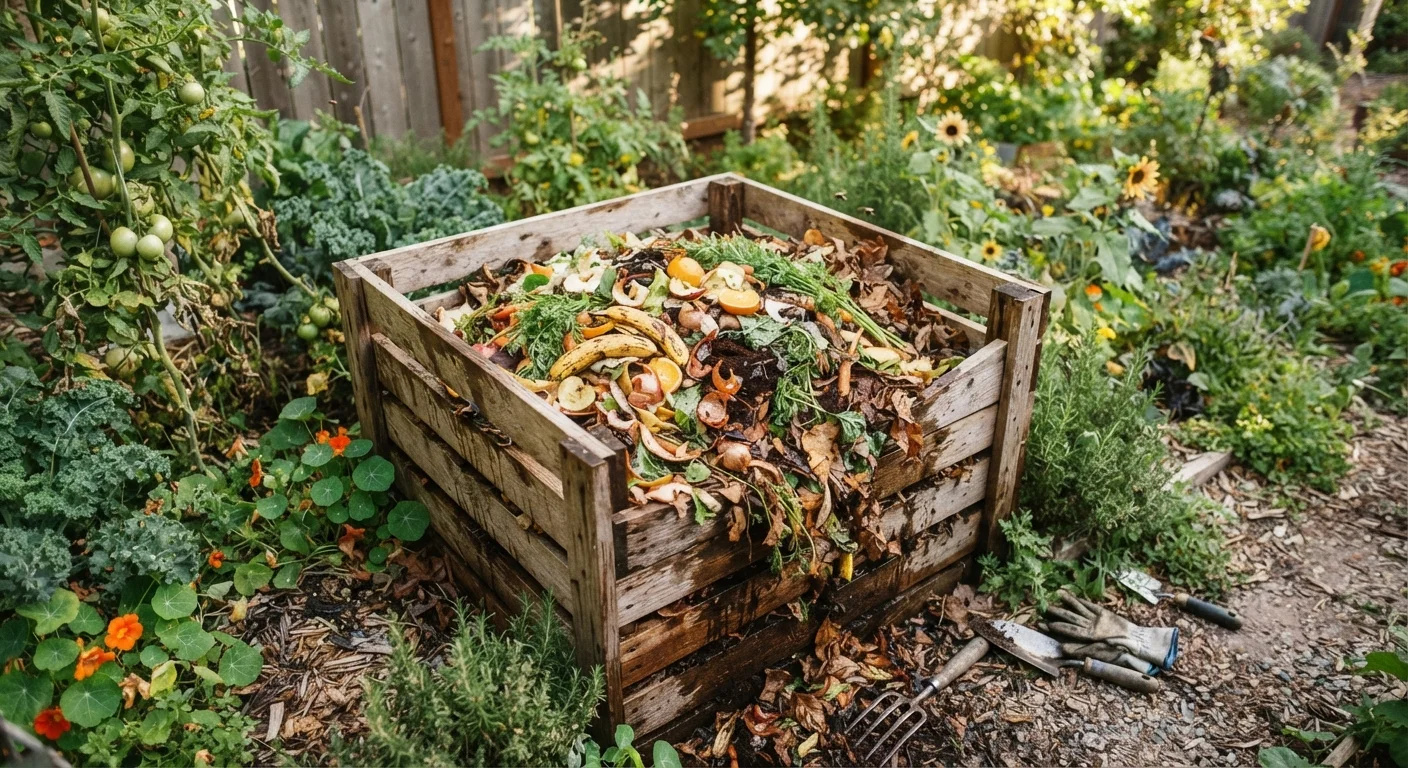
- Hot composting: You build a pile at least three feet wide and three feet tall, turn it regularly, and keep it moist. Microbial activity generates internal heat that accelerates breakdown and can kill weed seeds. This method produces compost in four to eight weeks but requires consistent attention.
- Cold composting: You add materials as they become available and leave the pile largely undisturbed. It is low-effort but slow, typically six months to a year. Good for gardeners who want minimal maintenance.
- Vermicomposting: Red wiggler worms process food scraps in a contained bin. It works indoors, handles small volumes well, and produces a particularly nutrient-dense amendment called worm castings. The bin needs moisture management and protection from temperature extremes.
Bin options range from a simple wire mesh cylinder, which costs very little to build, to a purchased tumbler that makes turning easier. You do not need to spend much to start composting effectively.
Start small to build the habit
A five-gallon bucket near the kitchen sink makes it easy to collect scraps before transferring them to an outdoor bin. Line it with a paper bag or use a tight-fitting lid to control odors. Emptying it every two to three days keeps the process manageable and prevents fruit flies from becoming a problem.
What to put in and what to keep out
Compostable materials fall into two broad groups. Greens are nitrogen-rich: vegetable and fruit scraps, coffee grounds, fresh grass clippings, and plant trimmings. Browns are carbon-rich: dry leaves, cardboard, paper, straw, and wood chips.
Materials to keep out of a backyard bin include meat, fish, bones, dairy products, and cooking oils. These attract rodents and create persistent odors. Pet waste carries pathogens that a home pile may not reliably eliminate. Diseased plant material can reintroduce problems to your garden if the pile does not get hot enough to kill pathogens.
Greens
Nitrogen-rich compost materials such as vegetable scraps, coffee grounds, and fresh plant clippings. They provide the protein and moisture that microbes need to break down organic matter.
Browns
Carbon-rich materials such as dry leaves, cardboard, and straw. Browns provide structure and energy to the composting process and help prevent a soggy, smelly pile.
Hot composting
A method in which a large, regularly turned pile generates internal heat through microbial activity. The heat speeds decomposition and can destroy weed seeds and some pathogens.
Vermicomposting
Composting that uses red wiggler worms in a contained bin to process food scraps into worm castings. It works well indoors and in small spaces.
Bokashi
A fermentation-based system that processes food waste in a sealed bucket using beneficial microbes. It handles a wider range of food waste than a standard open bin and is suited to indoor or small-space use.
Worm castings
The waste material produced by worms during vermicomposting. Castings are a concentrated, nutrient-dense soil amendment often described as one of the richest natural fertilizers available.
Cooked food scraps are a gray area. Plain cooked vegetables are generally fine. Heavily seasoned or oily leftovers are better avoided in open bins. A sealed bokashi system handles a wider range of food waste, including cooked scraps, if that is a priority.
Balancing greens and browns
A compost pile needs both nitrogen and carbon to decompose efficiently. Too many greens without enough browns produces a slimy, smelly pile. Too many browns without greens slows decomposition to a crawl. A common guideline is roughly three parts browns to one part greens by volume, though the pile will tell you when the balance is off.
In practice, most households generate more greens than browns. Save cardboard boxes, newspaper, and dry leaves in fall to have a ready supply of brown material throughout the year. Dried leaves are one of the most available and cost-free carbon sources available to suburban gardeners.
If you grow food in a tight outdoor space and want ideas for maximizing yield alongside your composting system, see our container and small-yard gardening guide.
Managing and troubleshooting your pile
A working pile needs three things: enough mass to retain heat, adequate moisture, and oxygen from turning. The material should feel about as damp as a wrung-out sponge. If the pile is dry, add water or more greens. If it is soggy, add dry browns and turn it to open up air pockets.
Turning frequency matters for hot composting. Turning every five to seven days keeps oxygen levels high and speeds decomposition. For a cold pile, turning once or twice a month is enough to prevent compaction.
Common problems and their fixes:
- Ammonia smell: too many greens. Add browns and turn.
- No activity or slow breakdown: pile is too dry, too cold, or lacks nitrogen. Add water and a nitrogen source such as fresh grass clippings.
- Pests: bury food scraps in the center of the pile rather than on top, and check that meat and dairy are absent.
Using finished compost in your garden
Compost is ready when it looks uniformly dark and crumbly, has an earthy smell, and contains no recognizable food scraps. If you see chunks of material still breaking down, let the pile sit a few more weeks or screen out the unfinished pieces and return them to an active pile.
Common uses include mixing two to four inches into garden beds before planting, blending it into potting mix at roughly one part compost to three parts base mix, or using it as a light top dressing around established plants. Compost does not have a precise nutrient content the way synthetic fertilizers do, but it consistently improves soil texture, water retention, and long-term fertility.
One cubic yard of finished compost can cover roughly 100 square feet at a three-inch depth. A household compost system will not produce that volume quickly, but even modest amounts mixed into planting holes or used as a surface mulch deliver measurable benefit over time.