

Key Takeaways
Our Verdict
No single material wins for every situation. Reclaimed lumber and landscape timbers suit gardeners who want low upfront cost and are comfortable replacing boards after several years. Cinder blocks work well for permanent installations where longevity matters more than flexibility. Galvanized metal fits gardeners who want a long-term bed without ongoing wood rot concerns. Whatever you choose, the soil mix inside the bed matters more than the walls around it.
| Best for | Recommended |
|---|---|
| Tightest budgets with immediate access to materials | Reclaimed lumber |
| Permanent beds with minimal future maintenance | Cinder blocks |
| Long-term durability without rot concerns | Galvanized metal |
| Moderate budget with a natural look | Cedar or landscape timbers |
Why material choice matters more than it seems
A raised bed is a multi-year investment of time and soil amendment. Choosing a material that fails in two seasons means rebuilding the whole structure, often at higher total cost than a sturdier option would have required upfront. The goal is matching material to your actual garden timeline, not simply picking whatever costs least at the hardware store today.
Most families are working with a budget somewhere between free (salvaged materials) and around $150 for a 4x8-foot bed. Within that range, the options differ significantly in longevity, ease of assembly, food safety considerations, and appearance. If your growing space is limited, the bed material also affects how easily you can reposition or expand later.
Reclaimed and salvaged lumber
Salvaged lumber from pallets, old fencing, or demolished decks can cost nothing. For families who can source clean, untreated wood, this is the most budget-friendly starting point. The main risk is contamination: older lumber may have been treated with chemicals no longer permitted for residential use, including chromated copper arsenate (CCA), which was phased out for residential use in the U.S. by 2004. Avoid any wood with a greenish tint or unknown treatment history if you are growing food.
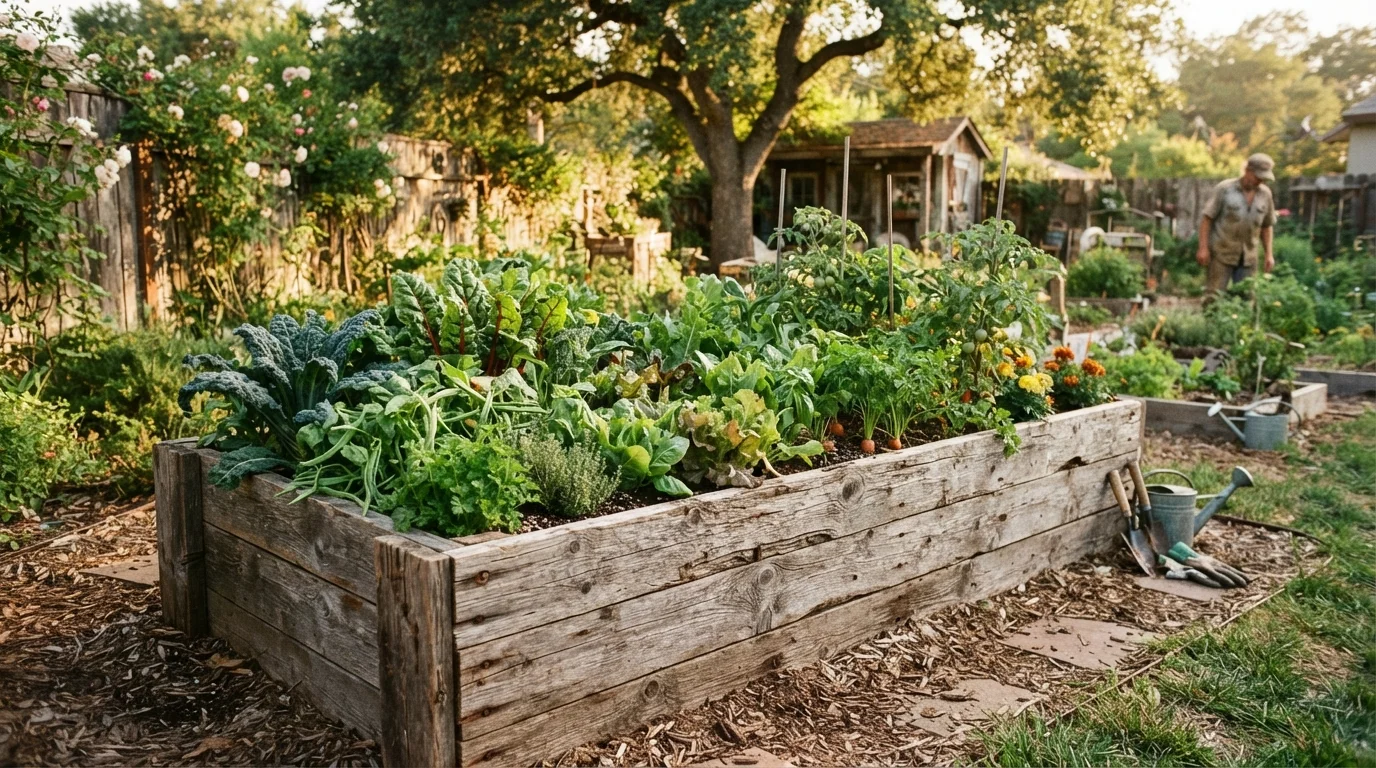
Untreated softwood salvage (pine, fir) typically lasts three to five years in ground contact before rot becomes structural. That lifespan is workable if your plan is to garden in a spot for a few seasons and reassess. Hardwood salvage, such as oak or locust, lasts considerably longer but is heavier and harder to cut.
Check the wood before you use it
Before filling a reclaimed-lumber bed, line the interior walls with food-safe plastic sheeting if you cannot verify the wood's treatment history. This adds minimal cost and keeps soil from direct contact with the wood. When in doubt, use salvaged lumber only for ornamental beds, not food crops.
Before filling a reclaimed-lumber bed, line the interior walls with food-safe plastic sheeting if you cannot verify the wood's treatment history. This adds minimal cost and keeps soil from direct contact with the wood.
Landscape timbers and construction lumber
New landscape timbers (typically 3x5 inches, sold in 8-foot lengths) run roughly $5 to $10 each at home improvement stores, making a basic 4x8 bed achievable for $20 to $40 in lumber alone. Standard 2x8 or 2x10 construction-grade pine is even less expensive and works well when doubled for added depth.
Current pressure-treated lumber (labeled AC2 or using copper azole or micronized copper) is considered acceptable for raised food beds by many land-grant university extension programs, though gardeners who prefer to avoid any treated wood entirely can use naturally rot-resistant species. Cedar and black locust resist decay without chemical treatment. Cedar is more widely available; expect to pay two to three times the cost of untreated pine, which is still modest in absolute terms for a single bed.
| Reclaimed lumber | Landscape timbers | Cedar | Cinder blocks | Galvanized metal | |
|---|---|---|---|---|---|
| Upfront cost (4x8 bed) | Free to $20 | $20 to $40 | $60 to $100 | $45 to $70 | $80 to $150 |
| Expected lifespan | 3 to 5 years | 5 to 8 years | 10 to 20 years | Indefinite | 20 or more years |
| Food safety considerations | Verify no CCA treatment | Use current AC2 or avoid treated | Safe untreated | Standard blocks considered safe | Zinc coating considered stable |
| Assembly difficulty | Low to moderate | Low | Low | Low (no tools needed) | Moderate |
| Portability | Moderate | Low | Moderate | None (very heavy) | Low to moderate |
| Rot resistance | Poor to moderate | Moderate | Good | Excellent | Excellent |
Cinder blocks and concrete blocks
Stacked concrete masonry units (often called cinder blocks, though true cinder blocks are now rare) create beds that will outlast every wood option. A standard 8x8x16-inch block costs roughly $1.50 to $2.50 each. A 4x8-foot bed at two blocks high requires about 28 blocks, putting materials in the $45 to $70 range. No fasteners, no tools beyond a level and rubber mallet.
Concerns about fly ash in older concrete blocks leaching heavy metals into soil are not supported by current research for standard concrete masonry units, but if you want certainty, fill the hollow cores with soil rather than leaving them empty, which also gives you extra planting pockets for herbs. The main drawbacks are weight (blocks cannot be moved easily once placed) and aesthetics, which some gardeners find industrial.
Galvanized metal stock tanks and panels
Galvanized steel stock tanks, originally sold for livestock watering, have become a practical raised bed option. A 2x6-foot oval tank holds enough volume for most crops. Corrugated galvanized panels sold for fencing or roofing can also be cut to form the walls of a custom bed, with simple wooden corner posts for structure.
Galvanized zinc coatings are generally stable in soil contact and are not considered a food safety concern at the concentrations involved, though gardeners with specific concerns should review guidance from their local cooperative extension office. Metal beds warm faster in spring than wood or masonry, which can extend the growing season for warm-season crops. They do not rot. The tradeoff is higher upfront cost (stock tanks typically run $80 to $150 depending on size) and potential for soil to dry out faster in summer heat.
Pairing any raised bed with quality soil is worth the effort. Making your own compost cuts the cost of filling a bed significantly, and improves drainage and fertility regardless of what material surrounds it.
For gardeners thinking about long-term planting mixes, perennial plants placed along the bed edges can reduce replanting costs in subsequent seasons.